


Product Quick Navigation
Get a Quote
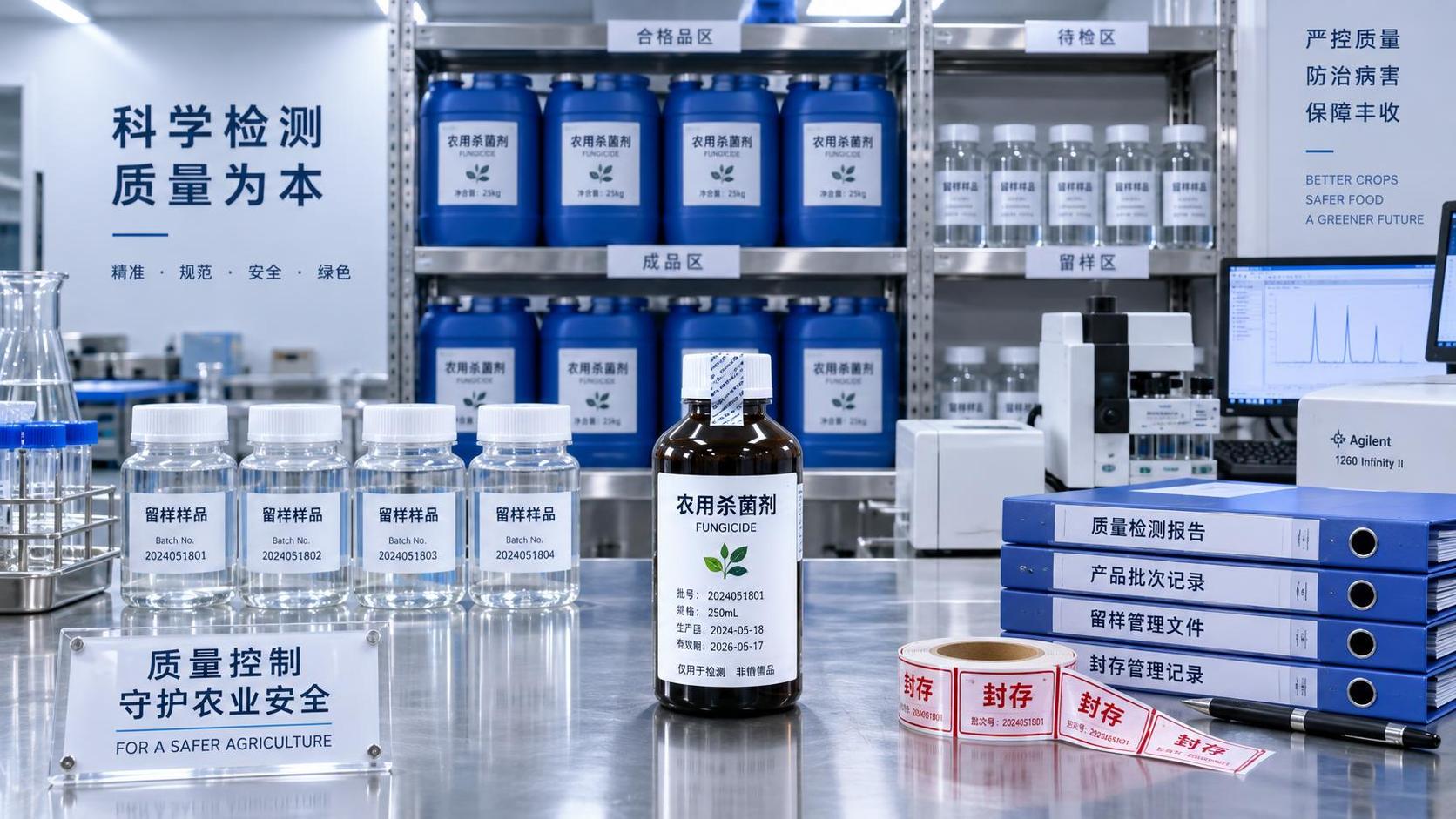
For a bulk fungicide purchase, the document pack should let a buyer answer four practical questions before the goods move: What exactly is in the product? Does the batch meet the agreed specification? Can it legally be imported, stored, sold, or used in the intended market? Can the shipment be traced if a quality claim arises later?
A low quotation without clear answers to those questions can become expensive very quickly. A product may have the correct active ingredient name but the wrong concentration, formulation type, impurity profile, label status, packaging classification, or batch history for the buyer's intended use. The most useful approach is to request a small set of documents early, then require batch-specific evidence again before each shipment.
Start with the product identity, not the supplier's general brochure
The first review should establish whether the quoted material is the same product your business needs. “Fungicide” is too broad for procurement control. Technical-grade active ingredients, soluble concentrates, suspension concentrates, wettable powders, water-dispersible granules, and ready-to-use mixtures can share a similar commercial description while carrying very different quality, storage, transport, and registration implications.
Ask for a technical data sheet or formal product specification that identifies the product unambiguously. It should state the active ingredient or active ingredients, concentration or assay basis, formulation type, appearance, relevant physical properties, storage conditions, shelf life, and packaging options. For formulated products, the document should also identify whether the declared concentration is expressed by weight, volume, or another specified basis.
Procurement teams should compare this document against their own purchase specification rather than treating the supplier sheet as the specification by default. A technical sheet is often descriptive. The purchase contract or purchase order needs measurable acceptance criteria: assay range, moisture or water content where relevant, pH, density, particle-size requirements for solid formulations, suspensibility or dispersion performance where applicable, and any controlled impurity limits.
It is also important to confirm the commercial form. A buyer sourcing an active ingredient for local formulation should not assess it as though it were a finished crop-protection product. Conversely, a distributor or agricultural input company buying finished Fungicides needs documents that support the exact formulation and approved market use. These are separate purchasing decisions, even when the active substance is identical.
The certificate of analysis is the batch-level document that matters most
A Certificate of Analysis, usually called a COA, is central to bulk chemical buying because it links laboratory results to a specific production lot. A generic “typical analysis” or a certificate copied from an earlier shipment is not enough to release a new order. The COA should be issued for the batch being supplied and should match the lot number shown on the packing list, drum, bag, intermediate bulk container, or other packaging.
At a minimum, check that the COA contains:
- The supplier's legal name and product identification.
- A unique batch or lot number.
- Manufacturing date and, where applicable, retest date or expiry date.
- The test parameters, methods or method references, specification limits, and actual results.
- A statement of conformity to the agreed specification.
- Authorization details or a verifiable electronic issue record.
The results should be useful for the product type. For a technical active ingredient, assay and identified impurities may be the primary release tests, together with appearance, moisture, acidity or alkalinity, and other stability-related properties. For a formulation, the COA may also need physical tests such as density, pH, wet sieve residue, persistent foam, suspensibility, emulsion stability, dispersibility, or particle-size distribution. The appropriate tests depend on the formulation and handling method; requesting a long, generic list can obscure the few measurements that actually determine whether the material will perform in a customer's process or field application.
Buyers should be cautious when COAs show only “pass” without numerical results, omit the test method, carry a batch number that does not appear elsewhere in the shipping documents, or repeat exactly the same values across many lots. Those patterns do not automatically prove a problem, but they justify a closer technical review before payment or shipment release.
Agree on pre-shipment COA timing
For recurring supply, make the COA part of the release process rather than an attachment sent after dispatch. The supplier should provide the batch-specific certificate before loading, giving the buyer time to compare it with the contractual specification and request clarification. This matters particularly where a rejected cargo would face long transit times, hazardous-goods handling costs, port storage charges, or limited return options.
Where the purchase value or application risk is high, the buyer may also retain a sealed reference sample from the supplied batch. The sampling method, sample size, seal identification, and retention period should be agreed in advance. A later laboratory dispute is hard to resolve when neither party can demonstrate that its sample represents the shipped lot.
A specification sheet and COA serve different purposes
These documents are often requested together but should not be treated as interchangeable. The product specification defines what the supplier has committed to deliver. The COA records the results for one batch. A reliable procurement file needs both.
A common error is accepting a supplier's internal specification after the commercial terms have already been agreed. If the buyer's downstream customer requires a tighter assay range, lower impurity ceiling, different formulation performance, or particular packaging material, those requirements need to appear in the agreed quality annex. They should not remain only in email correspondence or an informal expectation.
Review the Safety Data Sheet for operational fit, not just compliance paperwork
An SDS is essential even when the buyer has purchased the same active ingredient before. It should correspond to the exact product and formulation being offered, use the language and format needed for the destination market, and provide information consistent with the label, transport classification, and packaging declaration.
From a procurement perspective, the most consequential sections are often the ones that affect logistics and warehousing: hazard classification, transport information, recommended storage temperature, incompatibilities, personal protective equipment, spill response, fire-fighting measures, and disposal considerations. A product that needs temperature control, segregation from certain materials, specialized ventilation, or more restrictive transport arrangements may still be viable, but those conditions need to be reflected in landed cost and receiving-site capability.
Do not assume that a material with a familiar active ingredient will have identical handling requirements in every formulation. Solvents, surfactants, carriers, and concentration can change transport classification, flash point, storage behavior, and worker-protection requirements. This is one reason the SDS must be reviewed alongside the specific formulation data sheet and commercial invoice description.
Market authorization must be verified before a bulk order is committed
Quality documentation cannot substitute for pesticide registration or other market authorization. A technically compliant fungicide can still be unsuitable for importation, sale, relabeling, repacking, or agricultural use in the destination country. The buyer needs to establish the required approval route before treating a shipment as commercially usable inventory.
The documents to request depend on the supply model. For a finished product, this may include evidence of the relevant product registration, approved label information, authorization holder details, and confirmation that the formulation, manufacturer, pack size, and intended claims align with the authorization. For a technical material, the buyer may need confirmation that the active ingredient source and manufacturing site can be used within its own formulation or registration framework.
Procurement should pay close attention to the identity of the manufacturer. A registration, source approval, or accepted dossier associated with one manufacturing site does not necessarily extend to another site, affiliate, or contract producer. The same caution applies when a trading company supplies material produced by a third party. Request documentation that identifies the actual manufacturer and manufacturing location, then compare it with the regulatory position relevant to the target market.
Label documents should also be reviewed before the first shipment of a finished fungicide. The label is not merely sales artwork. It can contain legally relevant information on use patterns, target crops, application restrictions, hazard statements, storage, and disposal. A mismatch between the label, SDS, and product composition should stop the purchasing process until it is resolved.
Ask how the supplier controls consistency, then verify the evidence that affects your order
Many suppliers can provide a quality-system certificate or a statement describing their quality controls. Such material can be useful during supplier qualification, especially when combined with an audit, questionnaire, or inspection arrangement. It should not replace batch-specific evidence.
For bulk fungicide procurement, the more useful questions are concrete: Is the supplied lot produced at the declared site? Is it a normal production batch or a reworked batch? Are incoming raw materials and finished lots traceable? Which tests are performed before release? What happens when a result falls outside specification? How are retained samples controlled? A supplier does not need to disclose proprietary process details to answer these questions meaningfully.
Buyers should also define whether changes require prior approval. Relevant changes can include active ingredient source, formulation component, manufacturing site, analytical method, specification limit, packaging configuration, or shelf-life basis. Without a change-notification clause, a product may remain broadly within a supplier's internal commercial description while becoming unsuitable for a buyer's registration, blending process, or customer commitment.
Traceability documents protect the buyer after the cargo arrives
When a delivery issue occurs, the ability to connect physical goods with the document file becomes as important as the original laboratory result. Request shipping documents that preserve this chain: commercial invoice, packing list, bill of lading or transport record, certificate of origin when required, packaging declaration, and batch list showing how each lot was allocated to the shipment.
Before accepting delivery, receiving staff should verify that the product name, concentration, batch number, manufacturing date, packaging count, and net weight agree across the labels, COA, packing list, and invoice. Damaged seals, relabeled packages, unreadable lot codes, or unexplained differences should be recorded before unloading or use. Once lots are commingled in storage or transferred into production, the cost of identifying the affected material rises sharply.
For products with a defined shelf life, calculate remaining usable life at the expected delivery date rather than simply accepting the stated expiry date. A bulk order may arrive compliant yet leave too little time for local release testing, repacking, distribution, or seasonal demand. Minimum remaining shelf life should be a contractual requirement where inventory turnover is uncertain.
Use a document matrix before comparing landed cost
The procurement decision becomes clearer when required documents are listed against the transaction stage. During supplier qualification, collect the technical specification, SDS, manufacturer identity, quality-system evidence, and applicable regulatory documentation. Before shipment, require the batch COA, final label or packaging details, batch allocation, and transport information. At receipt, reconcile the cargo against the document set and retain records with the incoming inspection file.
This structure also improves quotation comparisons. A lower unit price may conceal additional laboratory testing, relabeling, controlled storage, registration work, rejected-cargo exposure, or a shorter usable shelf-life. Those costs are rarely visible in the first offer, but they can determine which source is genuinely competitive.
A supplier that can provide a coherent, batch-linked document pack is easier to qualify and manage over repeated orders. For fungicides, that discipline is more valuable than a large stack of generic certificates: it gives the buyer evidence that the material purchased, shipped, received, and eventually released to the market is the same material that was evaluated at the start of the transaction.
Send Us Your Inquiry Today

INEOS Chemical is a professional chemical product supplier with ample stock of all chemical categories and excellent quality, welcome your purchase inquiry.